

What Makeup Item Often Contains Dried Cochineal Bugs As An Ingredient?
From Aztec "cactus blood" to British redcoats to a Starbucks scandal, cochineal has long been coveted. Just don't tell your vegetarian friends they've probably eaten bugs.

Who'd have thought that a tiny cactus-eating bug would end up being responsible for one of the nigh-sought-afterwards dyes?
Cardinal and elemental, the colour blood-red is associated with such varied emotions as love, sin, acrimony — and even, cheers to Charles Dickens — the frustration that comes from cherry record, a metaphor for the rigid rules and procedures of bureaucracy.
First coveted by the ancient Aztec and Inca civilizations, the highly prized crimson dye-producing cochineal insect has been used since then to create the color red. It even enabled the Spanish Crown to finance its empire for well-nigh two centuries.
"It takes nearly 70,000 cochineal bugs to brand a single pound of cherry-red pigment. "
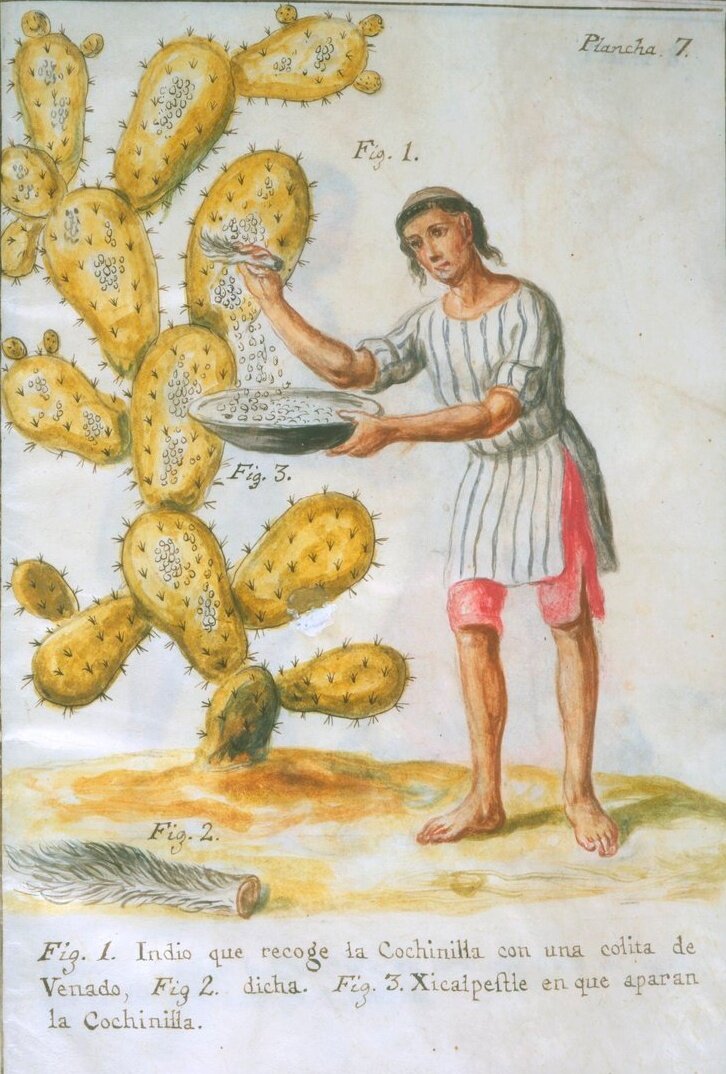
For a long fourth dimension, a Mexican bug had the entire world seeing red.
Bugging Out: The Nopal Cactus and the Cochineal
Although occasionally referred to every bit a protrude, cochineal (pronounced "coke-in-neel") is in fact a calibration insect, a parasitic bug that attaches itself to a host institute, drawing sustenance from it. They're about the size of a peppercorn and resemble a burgundy-colored piece of gnocchi.
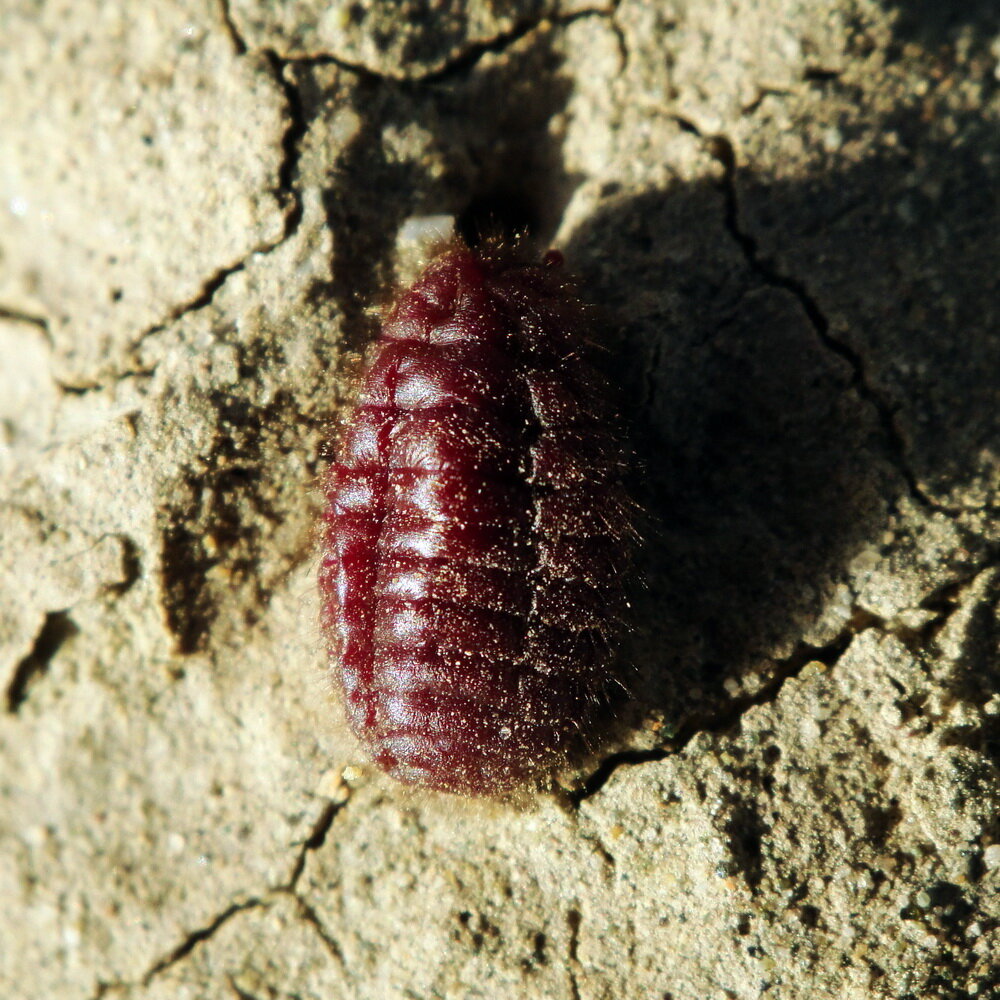
It'south the female cochineal bugs that tin can be used to create red — it but takes 70,000 of them to brand 1 pound of dye.
At maturity, it produces a white, cottony roofing as camouflage to hibernate from predators. Clusters tin be found in abundance on the broad, flat "paddles" or "pads" of the nopal, the fruit-begetting prickly pear cactus. In addition to their featherlike coats, the female cochineal produces a chemical called carminic acid, which is the source of the color used to make a cherry-red dye.

The lifecycle of a Smooth variety of the cochineal insect
The Aztecs were the outset to domesticate cochineal and referred to the insects every bit nocheztli, Nahuatl for "cactus blood." A colorfast pigment was produced past harvesting and grinding the dried carcasses of the female cochineal bug into a fine powder. In the dyeing procedure, a mordant is used to prepare the color. Different metallic compounds yield different shades. Aztecs often added a mordant of aluminum sulfate to the dye bath to bind the carminic acid to ritual and ceremonial textiles worn by their rulers as a symbol of wealth and status.

A red to dye for
Blood Money
Cochineal quickly became a prized commodity for Spain soon after Hernán Cortés and the conquistadors discovered macnu, the scarlet-colored pigment sold in cakelike form in the Aztec markets of Tenochtitlan. The Spanish saw the commercial value of these bugs, which quickly became the third-most valuable consign of the New World, afterward aureate and silver.

Nil in Europe could friction match the brilliant red that came from the cochineal bug. The Madonna With the Iris, from the workshop of Albrecht Dürer, circa 1500-1510
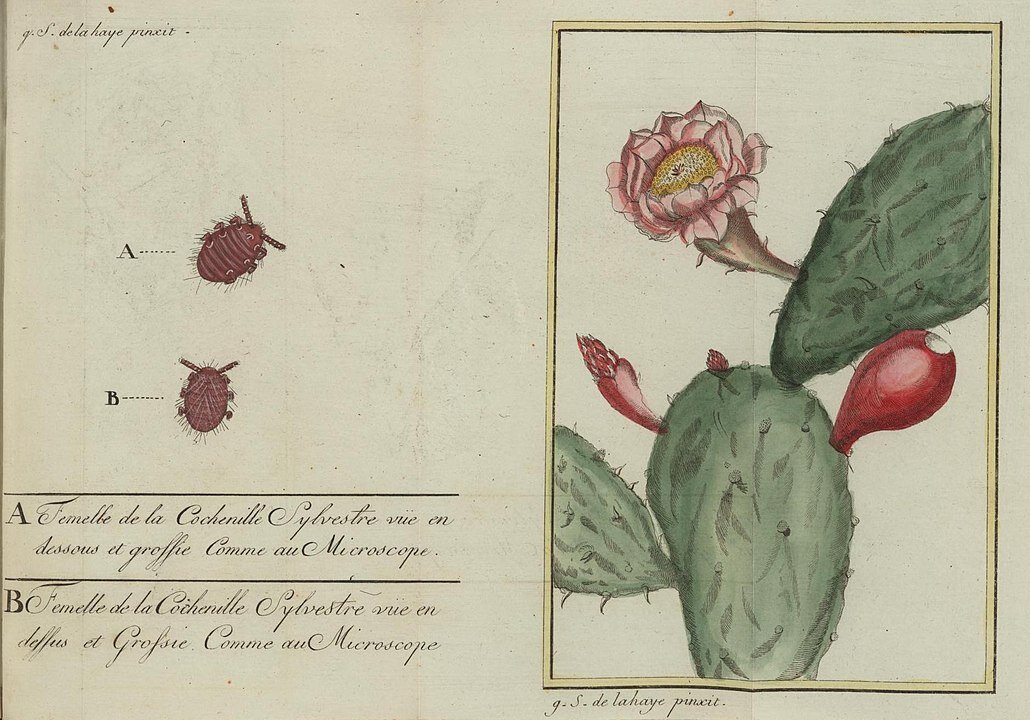
Cochineal red finally escaped the clutches of Spain-controlled United mexican states, thank you to a sneaky botanist named Thiéry de Menonville. Here are pages from his sketchbook showing cochineal and the nopal cactus.
Information technology takes most 70,000 insects to make a unmarried pound of paint. At the fourth dimension, Europe didn't have a dye that matched the luminescence and longevity of cochineal. For this reason, cultivation was restricted to Spanish-controlled Mexico from the 16th century up until 1777, when a immature French botanist past the name of Nicolas-Joseph Thiéry de Menonville managed to smuggle cochineal-infested cactus pads to Haiti.

Some of the iconic redcoats of the British armed forces were dyed with cochineal — the fact that they somewhat masked blood stains was a bonus.
The Redcoats Used Information technology, every bit a Madder of Fact
The term "redcoats" was coined in Tudor Ireland to refer to the British military uniform, which included the now-iconic peppery red jacket.

Only officers' coats were dyed scarlet with cochineal bugs.
After passing the New Model Ground forces ordinance in 1645, the British military officially adopted reddish every bit its uniform colour. Near were dyed a rusty ruby using the cheaper and more than accessible madder root. The costlier scarlet obtained from cochineal was reserved for officers and sergeants. Information technology's said that cerise was used because information technology wouldn't evidence blood stains, just blood dries to a blackish color, and this is believed to be a myth.

Gustation the rainbow — as well as some bugs! Prior to 2009, the "natural color" used to make your favorite red candies, including Skittles and Starburst, came from stale, ground-up cochineal insects.
Nutrient for Idea: You're Eating Bugs!
Not express to vesture, cochineal (or ruddy, as it's as well called) is used to give alcoholic beverages, cosmetics, shampoo and pharmaceuticals a bright red colour.
It's too used in food. In 2012, cochineal made headlines when Starbucks faced a public relations furor. Vegetarians and others who didn't similar the thought of eating bugs learned that the source of the red color in pop food items such as their Red Velvet Whoopie Pie and Strawberries and Crème Frappuccino contained insect guts.
Merely the U.S. Food and Drug Administration has tested and canonical cochineal as a nutrient coloring. To make this more appealing to consumers, it's often listed past other designations. So the side by side time you lot're picking upward something at the store, watch out for these ingredients, which are all other names for cochineal or cerise: E120, carminic acid, ruby lake or natural ruddy four — because, really, what'due south more natural than bugs?
I've unintentionally swallowed my fair share of insects while riding my bike to piece of work. Sure, it'south gross — just compared to synthetic blood-red dyes such every bit Cherry No. 2 and Carmine No. 40, which carry far greater health risks and are derived from coal or petroleum byproducts, bugs sound positively appetizing. –Knuckles
Source: https://www.thenotsoinnocentsabroad.com/blog/cochineal-red-how-bugs-created-one-of-the-worlds-most-expensive-colors
Posted by: carswellkinces.blogspot.com
0 Response to "What Makeup Item Often Contains Dried Cochineal Bugs As An Ingredient?"
Post a Comment